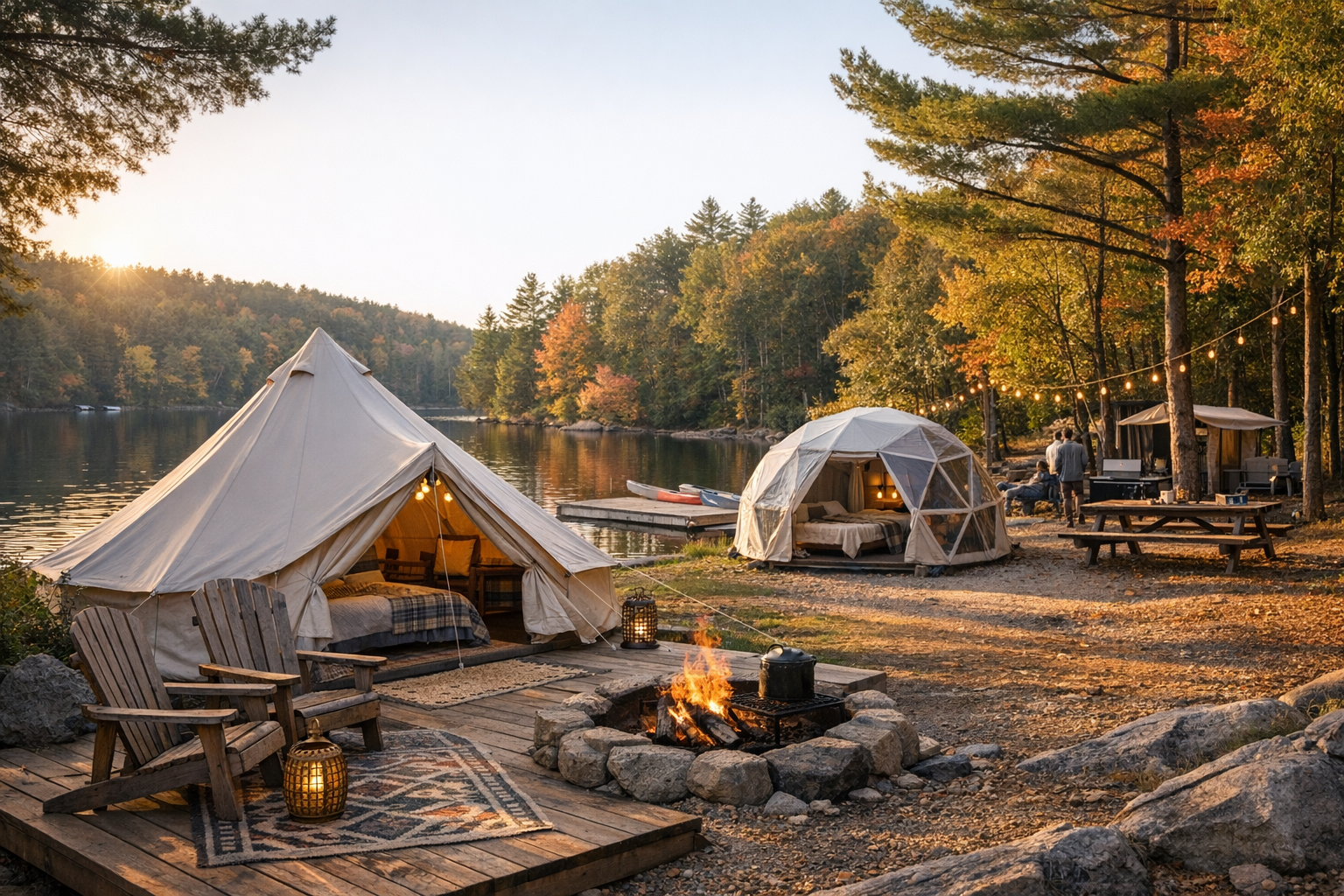
Seasonal glamping in Ontario
Ontario glamping changes a lot from one season to the next. The same site can feel easy and open in July, then cold, damp, and limited in November. Picking the right season affects comfort, activities, packing, and how much privacy you actually get.
Summer stays bring the widest activity range
Summer is the easiest season for swimming, hiking, and outdoor dining. Trails are usually open, lakes are warmer, and long daylight hours give you more room to plan your day.
The tradeoff is demand. Popular weekends book early, and lakeside sites often fill first. Heat and bugs can also change the experience fast, especially if your unit relies more on airflow than full air conditioning.
- Check how far your unit is from swimmable water
- Ask if outdoor dining includes a covered area for rain
- Confirm trail access, because some routes are short or shared
If you assume every summer setup works the same, you can end up with less shade, more noise, or a long walk to the main activities.
Fall works best for views, fires, and cooler nights
Fall glamping is popular for foliage and quieter evenings around a campfire. Daytime temperatures are often better for walking and sitting outside without strong summer heat. Southern Ontario Destinations for Glamping make the most of the beauty by being right in the middle of dense forests.
The main limit is temperature swing. A mild afternoon can turn into a very cold night, especially in exposed areas. If the unit has thin walls or limited heating support, the cozy image fades quickly after sunset.
Campfire stays also depend on site rules and weather conditions. Wet wood, wind, or temporary fire bans can remove a big part of the fall experience. A good backup matters more than people expect.
Winter glamping depends on real cold-weather design
Winter glamping in Ontario can be excellent, but only if the structure is built for it. Heated domes and insulated cabins are not equal, even when listings use similar wording.
Insulation, floor warmth, entry drafts, and bathroom access make a huge difference. A beautiful dome can still feel uncomfortable if the heater runs constantly and cold air leaks around the door. This is where an Ontario camping guide can help set realistic expectations before you book.
- Ask what heat source is used overnight
- Check if the washroom is private and indoors
- Confirm road access after snow or freezing rain
The biggest mistake is planning winter glamping like a hotel stay. Travel delays, icy paths, and limited daylight can affect both arrival and activities.
Spring gives you space, but conditions are less predictable
Spring often brings quieter bookings and fresh landscapes. That can mean better availability, lower crowd levels, and a calmer pace around the property.
The tradeoff is inconsistent ground and weather conditions. Melting snow, soft trails, and cold rain can reduce what you can actually do on site. A place that looks wide open in photos may feel muddy and restricted in early spring.
Ontario weather can move fast across all four seasons. Comfort is not just about temperature. Wind, humidity, bugs, rain, and ground conditions all shape how usable the site feels.
Weather shifts change comfort and activity planning
Operators connected with the Ontario camping association may offer clearer seasonal details, but you still need to check what is open during your exact dates. Spring booking windows can look attractive until key amenities are not ready yet.
A covered deck may matter more than a scenic view during wet periods. In colder months, short walks between the sleeping area and washroom can become a real issue. In warmer months, direct afternoon sun can make premium-looking units uncomfortable for hours.
Before you book, match the season to the activities you actually want to do, then check the site setup against likely weather changes. That step usually tells you more than the photos do.