In Home Foot Care London, Ontario: Services and Costs
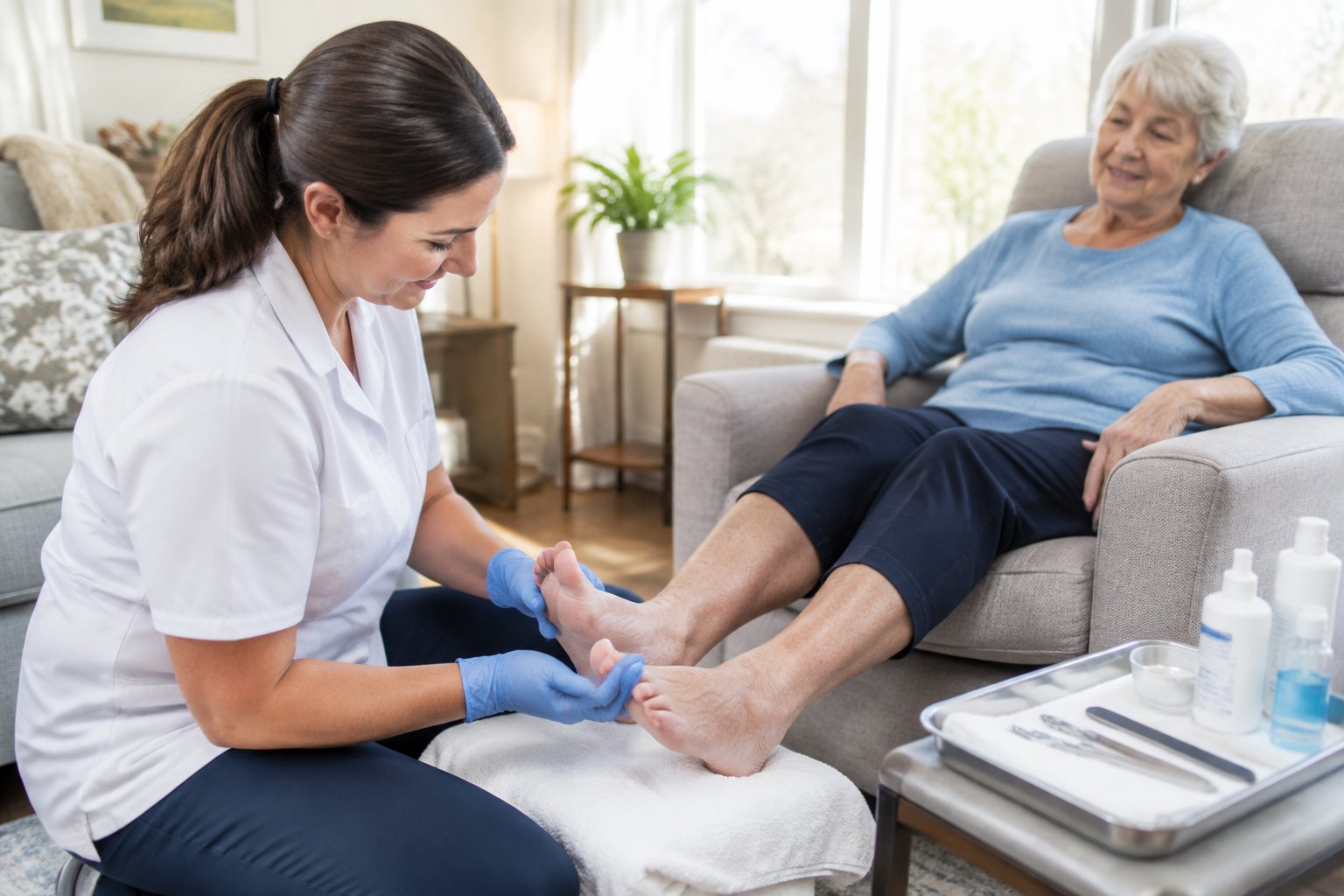
Most London residents can book in-home foot care directly from a nurse who specializes in foot care, with no doctor’s referral. You pay out of pocket at the visit, then claim through private benefits or your taxes if you qualify. A typical visit includes nail trimming, corn and callus care, and a check of your skin and circulation.
Expect to pay about $60 to $95 per home visit in London, Ontario. North London Foot Care, as one named example, lists $75 for an initial home visit and $60 to $70 for follow-ups. Rates differ by provider, visit length, and travel distance, so confirm current fees before you book.
Price alone won’t tell you whether a provider is safe. If you check a nurse’s registration and ask how their tools are cleaned, you can compare London options with confidence and avoid paying for care that doesn’t fit your needs.
What Services Can You Receive at Home?
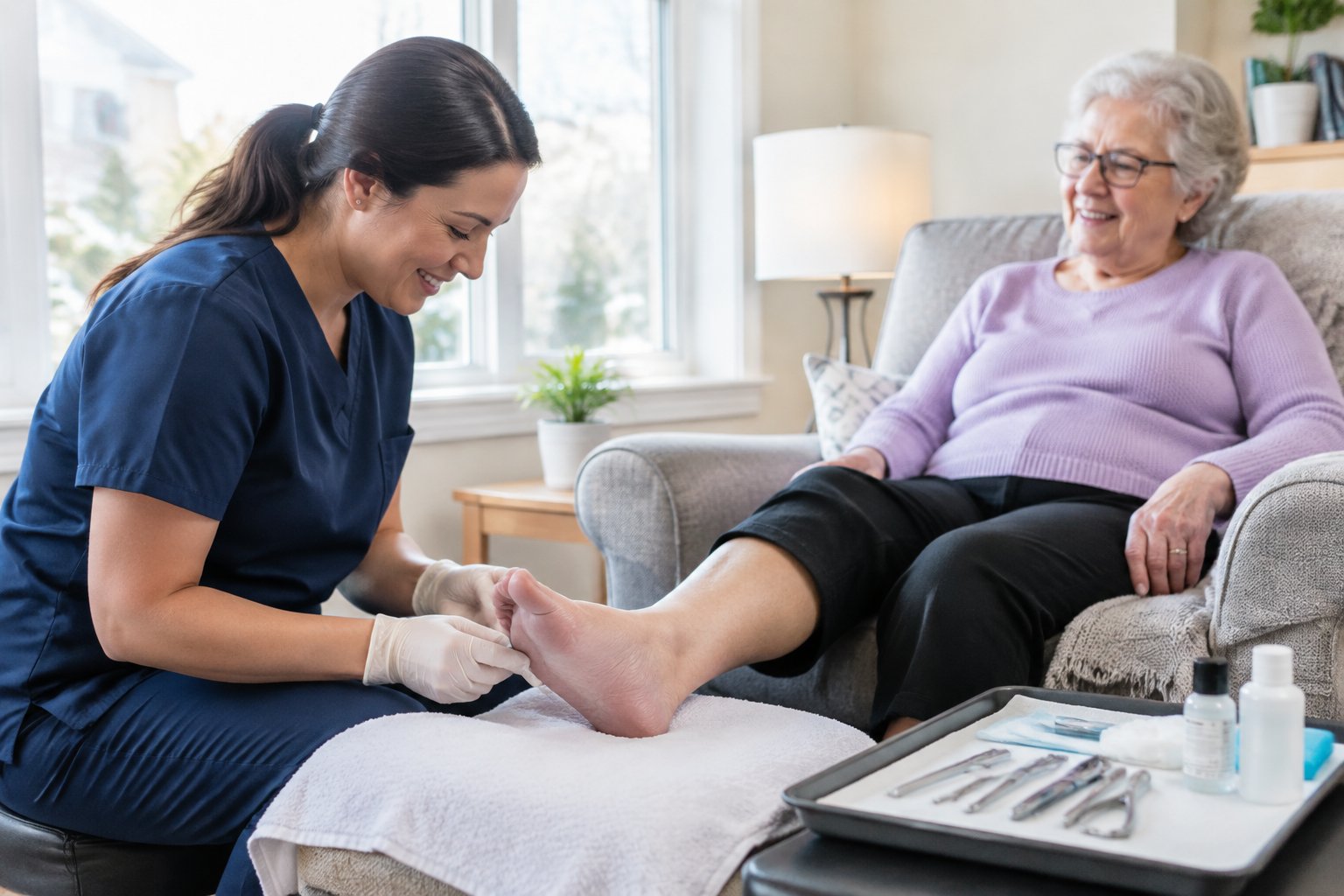
Home foot care in London covers routine, non-invasive work: nails, corns, calluses, skin checks, and advice for daily care. It suits people who find it hard to reach their feet or travel to a clinic. It has firm limits around wounds, infections, and surgery.
Toenail Trimming and Corn and Callus Care
Nail care is the core of most visits. A foot care nurse trims and files nails with clinical tools, including a rotary file that thins thick or curved nails. This kind of work is hard to do safely with household clippers.
Corns and calluses are filed down layer by layer until the pressure eases. Many nurses also treat cracked heels and smooth rough skin. One local listing describes basic and diabetic foot care by a registered practical nurse that includes corns, calluses, fungal nails, and nail filing and trimming.
Some providers add specialized nail treatments, such as resin-based correction for ingrown nails or light-based fungal nail therapy. These services are extra. Not every nurse offers them, so ask before you book.
Foot Assessments and Preventive Skin Care
Each visit should start with a check of your feet and lower legs. The nurse looks at:
- Circulation, such as skin colour, temperature, and pulses
- Sensation, often tested with a light touch
- Sores, blisters, or red pressure spots
- Changes in nails or skin since your last visit
This check is how small problems get caught early. A good nurse will tell you what they see and write it down so they can compare at the next visit. Most visits end with moisturizer on your feet and lower legs, plus advice on footwear and dry skin.
Support for Seniors and People with Diabetes or Limited Mobility
Diabetes, arthritis, poor eyesight, and trouble bending are the most common reasons people book. One London nurse describes providing medically necessary foot care to people with diabetes, arthritis, vision problems, and mobility issues, as well as to clients who simply want a professional to handle it.
For people with diabetes, a nurse’s role is preventive. Reduced feeling in the feet means a small cut or callus can go unnoticed. Regular nail and skin care, plus a trained eye checking for early changes, lowers that risk.
Home visits also help caregivers. You can sit in, ask questions, and learn what to watch for between appointments.
When Foot Problems Need Medical Assessment Instead
Routine nursing foot care does not replace a doctor, a wound care team, or a chiropodist. Contact your family doctor, a walk-in clinic, or the hospital if you notice:
- An open sore or wound that is not healing
- Redness, warmth, swelling, or pus that suggests infection
- A foot that turns pale, blue, or black, or feels suddenly cold
- New, severe pain, or a fever along with foot changes
Chiropodists handle a wider range of problems. In Ontario, mobile chiropodists treat nail, skin, and foot pain and fit custom orthotics at home. A foot care nurse should refer you on when a problem goes past routine care.
How Much Does a Home Foot Care Visit Cost?
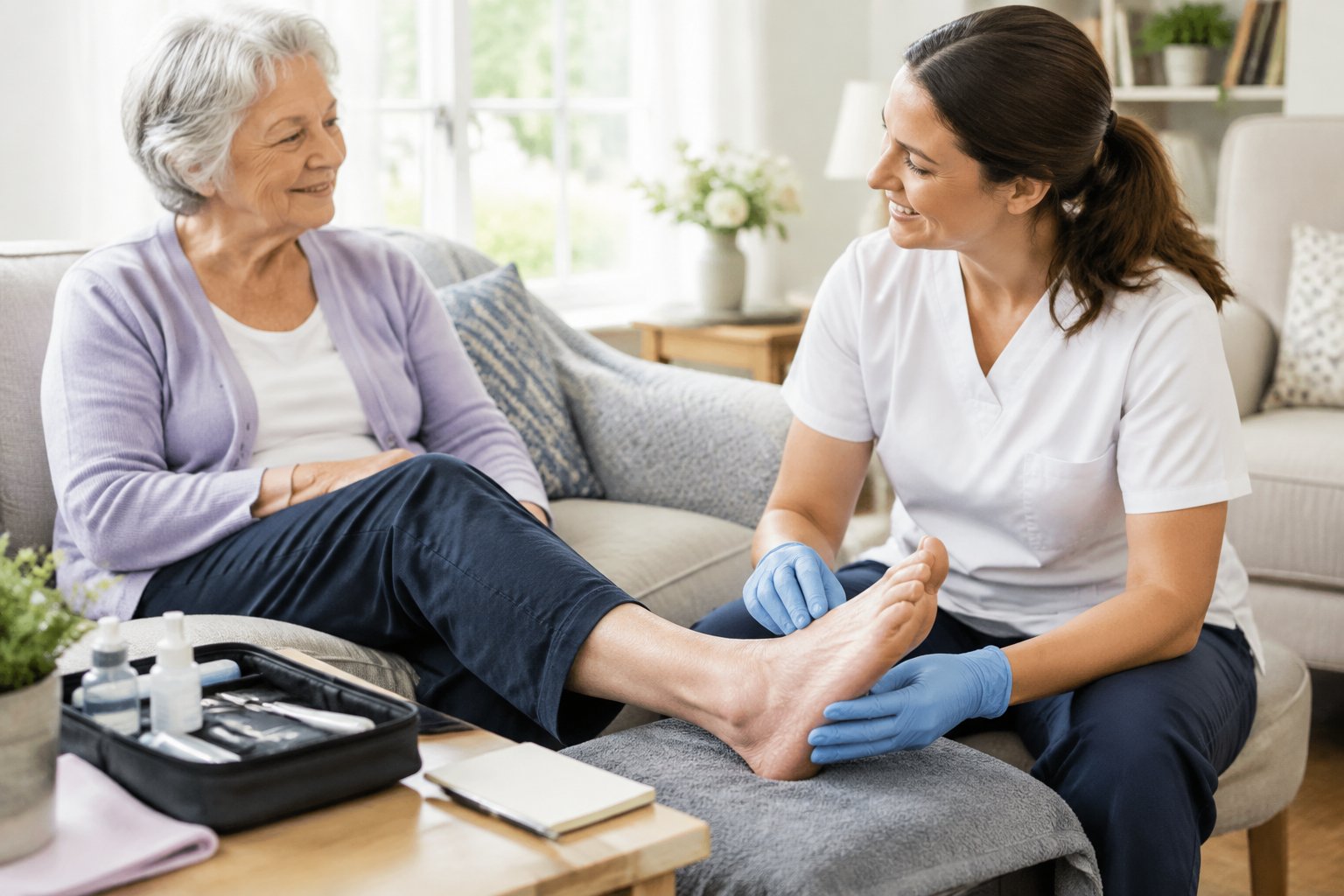
Most home foot care visits in and around London fall between $60 and $95. Specialized treatments and travel outside the city cost extra. Because OHIP does not pay for nursing foot care, the full fee is yours unless private benefits cover it.
Initial and Follow-Up Visit Prices
First visits take longer and sometimes cost more, since the nurse reviews your health history and does a full assessment. Published rates give you a useful starting point:
| Provider | Initial home visit | Follow-up home visit |
|---|---|---|
| North London Foot Care | $75 | $60 to $70 |
| Forest City Foot Care | Ask provider | $95 (45 to 60 min) |
| Sacred Soles Mobile Foot Care | $85 (one person) | $85 (one person) |
North London Foot Care lists $75 for an initial home visit of 40 to 75 minutes and $60 to $70 for follow-ups. Forest City Foot Care charges $95 per follow-up visit of 45 minutes to an hour. Sacred Soles charges $85 for one person or $75 each for two people in the same home, which helps couples.
Treat these as examples, not a citywide average. Prices change, so confirm before you book.
Additional Charges for Specialized Treatments and Travel
Add-on treatments are usually billed separately from routine care. North London Foot Care lists resin-based ingrown nail correction at $80 per nail. It also lists fungal nail light therapy at $80 per session with a minimum of 10 sessions, and neither includes full foot care. Sacred Soles prices the same nail correction at $65 per nail.
Location changes the price too. North London Foot Care charges $80 for a hospital visit and $60 to $70 in retirement or long-term care homes. Forest City Foot Care charges $120 for hospital visits and may add a travel fee outside London.
If you live in Komoka, Ilderton, Dorchester, or another nearby town, ask about travel charges when you call.
What to Ask About Insurance Coverage and Receipts
OHIP does not cover foot care nurse services, so check your extended health plan. Ask your insurer these questions:
- Does my plan cover foot care from a registered nurse (RN) or registered practical nurse (RPN)?
- Is there a yearly limit or a per-visit cap?
- Do I need a doctor’s note for the claim?
Then ask the provider for a detailed receipt. One nurse notes that invoices include her College of Nurses of Ontario licence number, which insurers often want. Keep receipts even if you have no coverage, since foot care may count toward medical expenses at tax time.
How Do You Choose a Qualified Local Provider?
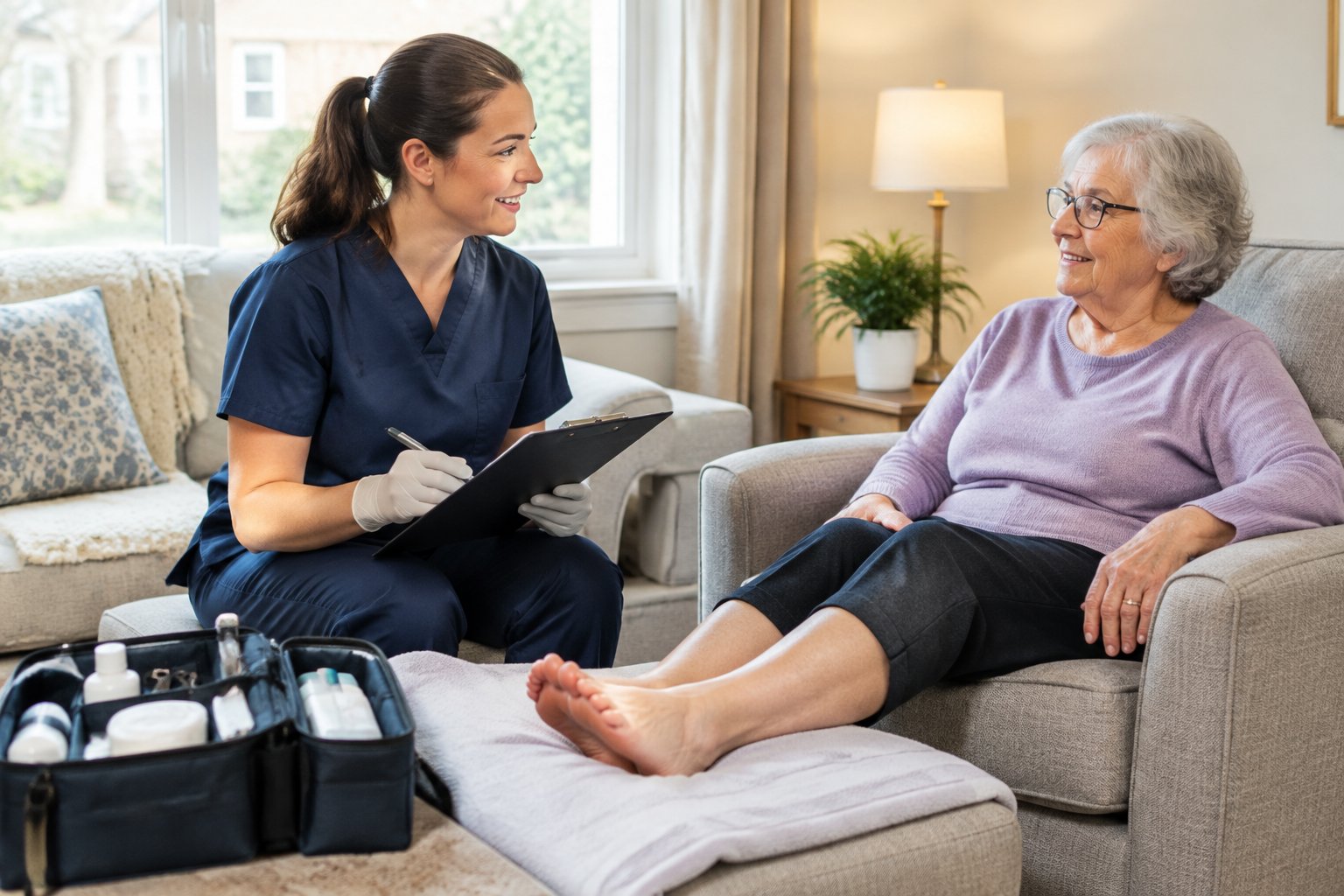
Choose a provider who is a registered nurse with extra foot care training, uses sterilized or single-use tools, and serves your neighbourhood. Those three checks protect you more than a low price does.
Checking Nursing Registration and Foot Care Training
Start with the person’s title. In Ontario, RNs and RPNs must register with the College of Nurses of Ontario. You can search the College’s public register by name to confirm a nurse is in good standing. Regulated professionals such as nurses and chiropodists can all be checked on their Ontario college’s public register.
Next, ask about foot care training. Many London nurses complete a post-graduate course in advanced foot care. “Foot care technician” or an esthetics background is a different level of training, and that matters if you have diabetes or circulation problems.
Your screening checklist:
- Full name and nursing title (RN or RPN)
- Registration number you can look up
- Foot care course completed, and when
- Liability insurance
- Receipts that show the licence number
Questions About Instrument Sterilization and Infection Prevention
Ask how tools are cleaned between clients. A safe answer names an autoclave, a machine that sterilizes tools with steam and pressure, plus single-use items for anything that can’t be autoclaved. North London Foot Care says it follows Public Health Ontario infection control guidance and uses tools that are disposable or autoclaved.
Good follow-up questions:
- Do you bring a separate sterilized kit for each client?
- How do you track that each kit was sterilized?
- What do you do with files and buffers after use?
A nurse who answers clearly and without hesitation is a good sign.
Comparing London Providers and Confirming Nearby Service Areas
Start with independent listings, then check each provider’s own website. The regional health line lists in-home foot care services for London and Middlesex that offer non-invasive treatment and skin care advice. The London Family Health Team has also published a list of local foot and nail care providers.
Directories help you find names. Provider websites give you prices, hours, and service details. Compare at least two or three nurses on fees, travel charges, and how soon they can see you.
Confirm your address is covered. Providers in London often serve St. Thomas, Strathroy, Komoka, Ilderton, and Dorchester, but each sets its own boundaries.
What Should You Expect During Your Appointment?
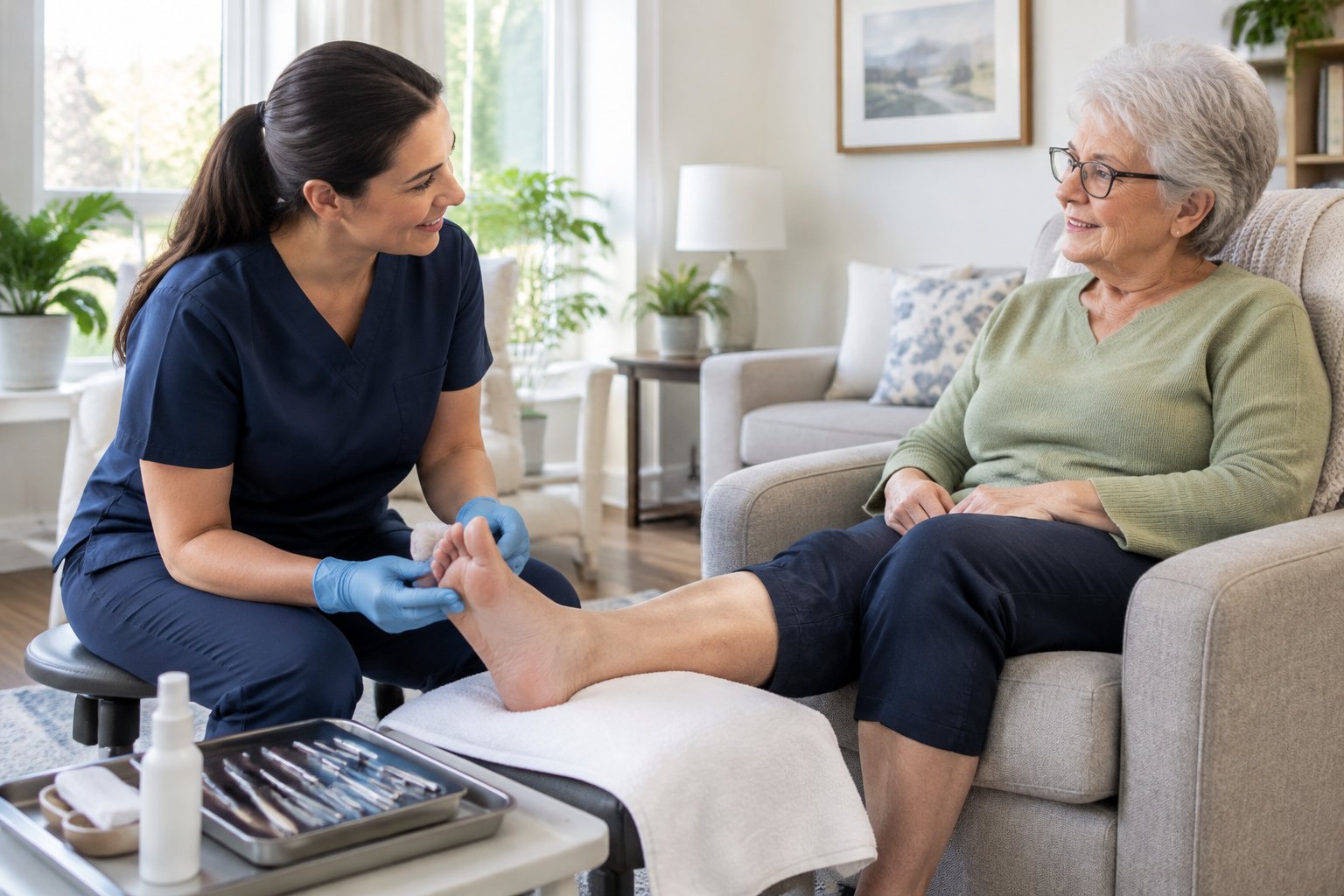
A first home visit lasts about 40 to 60 minutes and moves from a health review to an assessment, treatment, and advice. Follow-ups are shorter and usually booked every six to eight weeks.
Preparing Your Space and Health Information
The nurse needs very little room. Set up a sturdy chair with good light, plus a second chair or stool for the nurse. A towel under your feet helps catch nail clippings.
Have this ready:
- A list of your medications and allergies
- Health conditions such as diabetes, heart problems, or blood thinners
- Notes on pain, numbness, or recent changes
- Your benefits card if you plan to claim
Skip soaking your feet beforehand unless the nurse asks. Many nurses clean feet with a waterless cleanser at the start of the visit.
Assessment, Treatment, and Personalized Advice
The visit follows a clear order. North London Foot Care describes reviewing medical history, medications, and allergies. The nurse then checks circulation, sensation, sores, corns, and calluses before trimming and filing nails with specialized tools. The visit ends with a moisturizing massage of the lower legs and feet.
Speak up if anything feels tender. Thick or ingrown nails can be sore to work on, and the nurse can slow down or adjust.
Before the nurse leaves, ask for specific tips. Useful topics include the best way to trim between visits, footwear that fits your feet, and creams for dry heels.
Planning Follow-Up Care and Daily Foot Checks
Book your next visit before the nurse leaves, since many local providers fill their schedules weeks ahead. A six-to-eight-week cycle suits most people. Thick nails or diabetes may call for a shorter gap.
Between visits, check your feet once a day:
- Look at the tops, soles, and between the toes
- Use a mirror, or ask a family member, if bending is hard
- Watch for cuts, blisters, colour changes, or swelling
- Feel for warm spots or new pain
Call your doctor right away for any sore that does not start healing within a few days, especially if you have diabetes.
Choose Qualified Care That Fits Your Needs and Budget
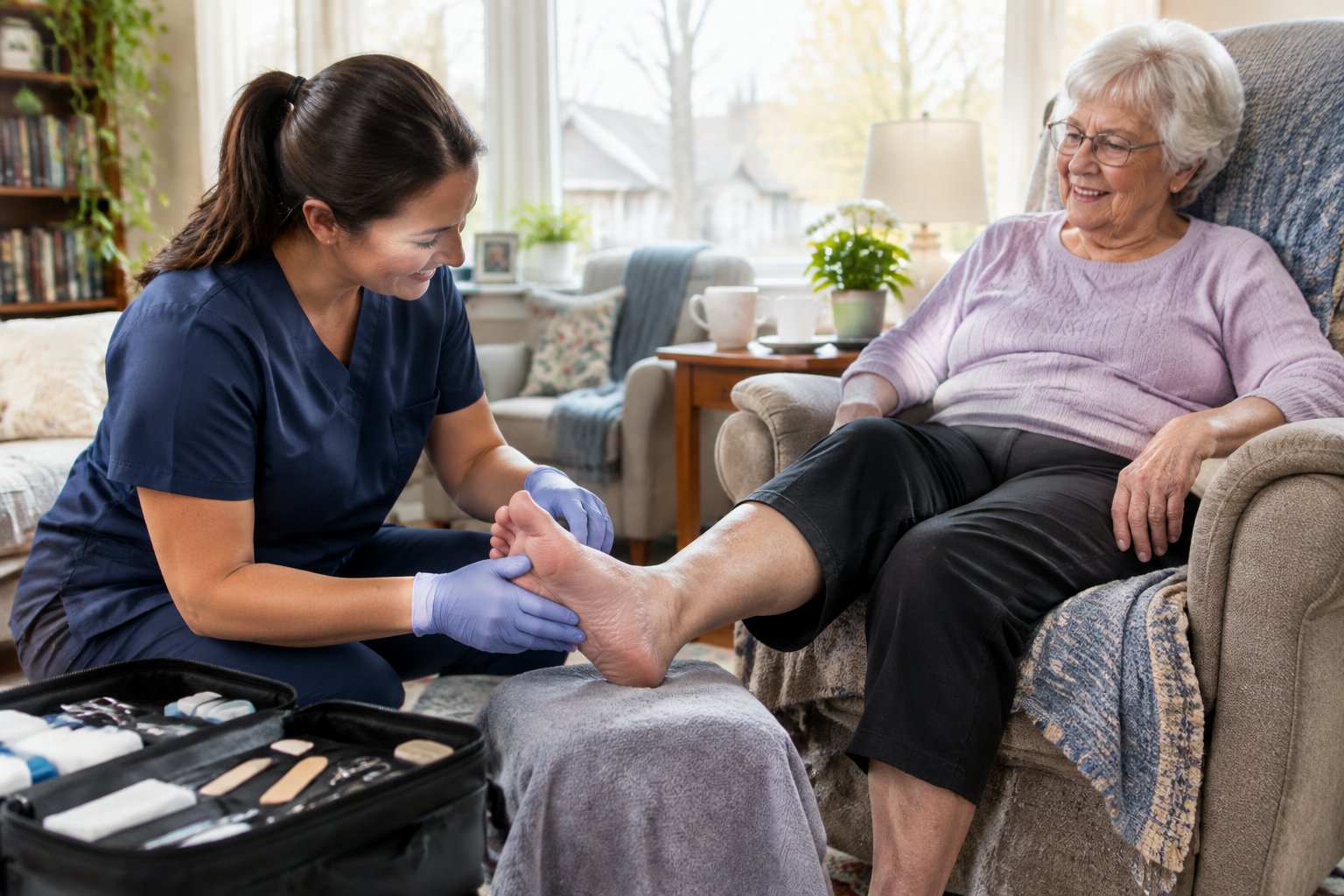
Good in-home foot care in London comes from a registered nurse with foot care training, clean tools, and clear pricing. Most visits cost $60 to $95. North London Foot Care’s $75 initial and $60 to $70 follow-up rates are one useful reference point.
Before you book, run through this short list:
- Confirm the nurse’s registration with the College of Nurses of Ontario.
- Ask about foot care training and autoclave sterilization.
- Get the visit fee, any travel charge, and add-on prices in writing.
- Check your extended health coverage and request a receipt with a licence number.
- Confirm the provider serves your address.
Keep routine nursing care and medical care separate in your mind. Nail and callus work, skin checks, and diabetes prevention fit home visits well. Open wounds, infection, or sudden colour changes need your doctor or a hospital the same day.
Frequently Asked Questions
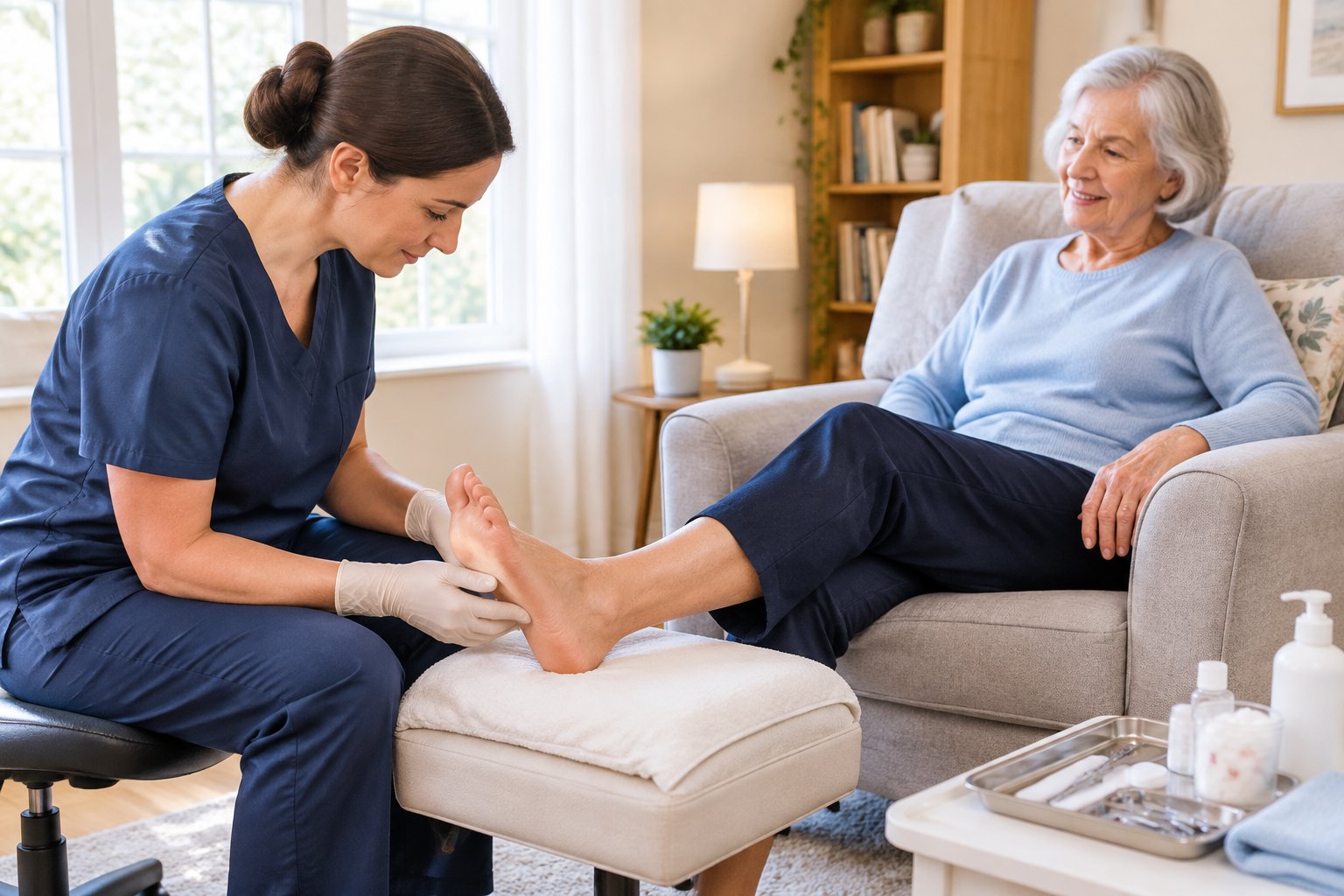
Do I need a doctor’s referral for in-home foot care?
No, you can book a foot care nurse directly. Some extended health plans ask for a doctor’s note before they pay a claim, so check your plan first.
How is nursing foot care different from a pedicure?
Nursing foot care is clinical work done by a regulated nurse who assesses circulation, sensation, and skin. A nurse can safely treat thick, ingrown, or fungal nails and care for people with diabetes. A pedicure focuses on appearance.
Can a foot care nurse visit a retirement home or long-term care residence?
Yes, many London nurses visit retirement homes, long-term care homes, and hospitals. North London Foot Care lists retirement and long-term care visits at $60 to $70. Check the residence’s rules for outside providers before booking.
Can fungal nail treatment be provided at home?
Some providers offer it at home, but not all. North London Foot Care lists light-based fungal nail treatment at $80 per session, with at least 10 sessions required and routine foot care billed separately.
Can I book foot care at home for a parent or family member?
Yes, family members and caregivers often book visits for a parent. Share the address, health conditions, and medications when you call. Plan to be there for the first visit so you can answer questions and hear the nurse’s advice.