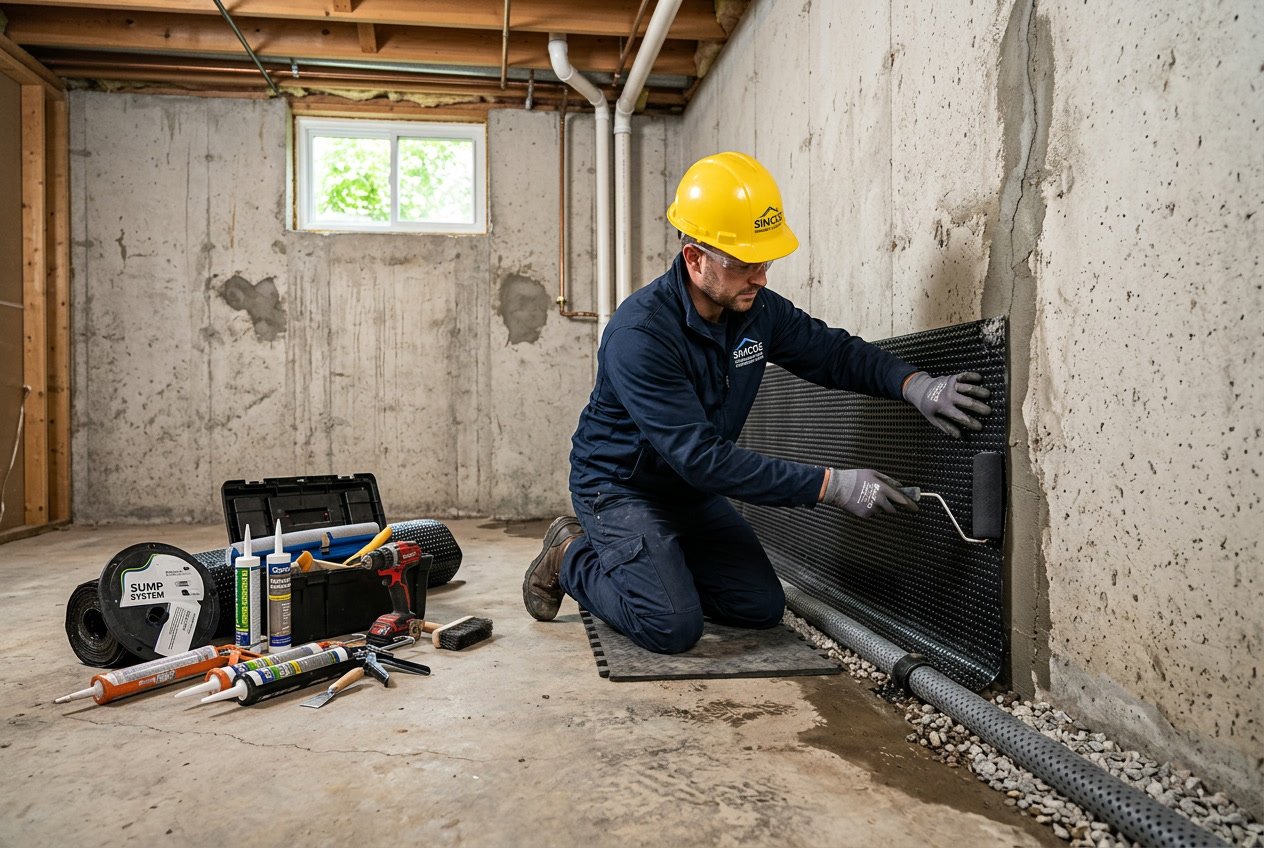
Complete Basement Protection Starts Here
Water damage in your basement can threaten your home’s structure and value. Homeowners in Simcoe face unique challenges with basement moisture and foundation problems due to soil conditions and water table levels in the area. Professional waterproofing and foundation repair services protect your investment and create a healthier living environment for your family.
Understanding what causes water intrusion and foundation damage helps you spot warning signs early. Wet spots on walls, musty odours, and cracks in your foundation all signal problems that need attention. Local basement waterproofing contractors can assess your specific situation and recommend the right solutions.
This guide covers proven basement waterproofing methods, foundation repair techniques, and protective systems that keep basements dry. You’ll learn how to evaluate contractors, understand different repair options, and make informed decisions about protecting your home. Taking action now prevents costly damage and maintains your property’s structural integrity for years to come.
Key Causes of Basement and Foundation Water Issues
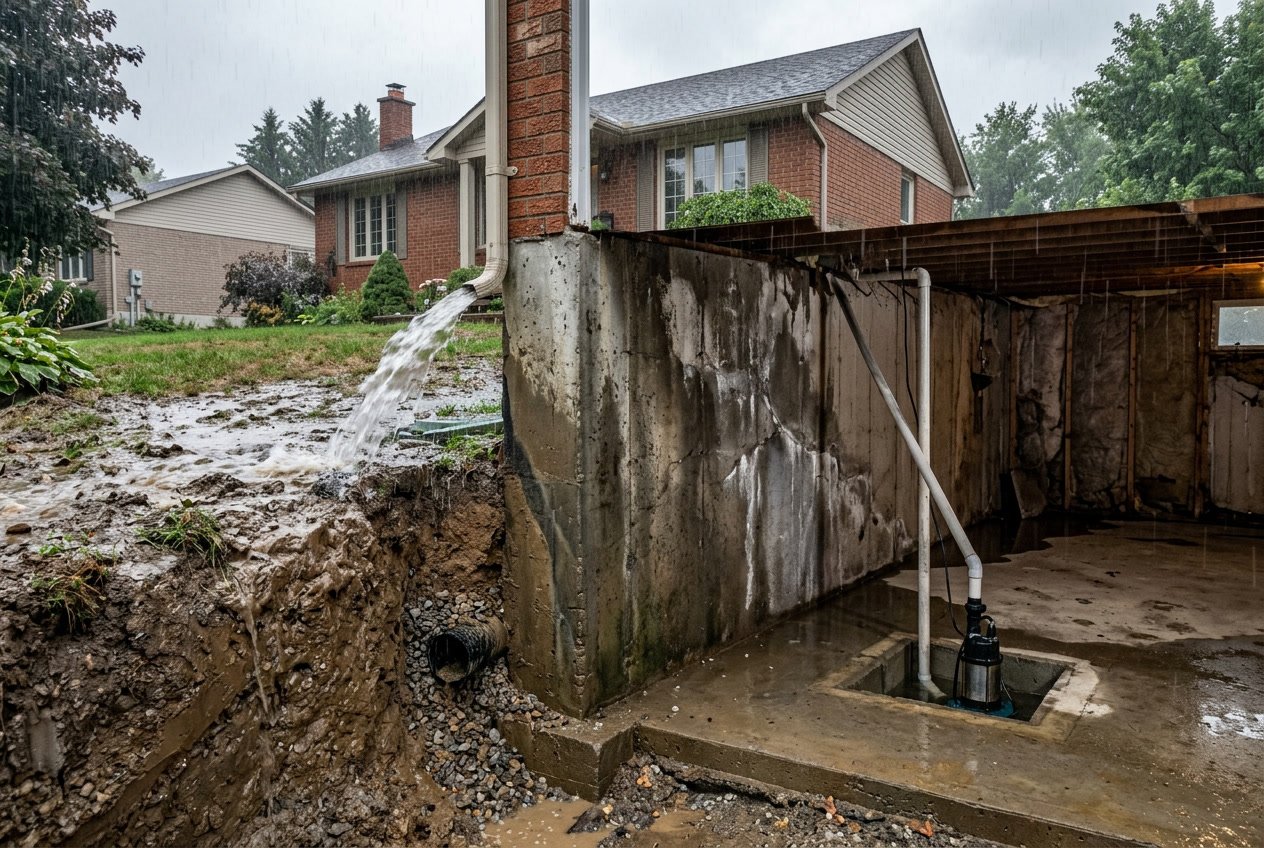
Water finds its way into basements through damaged foundations, poor drainage systems, and pressure from saturated soil. Simcoe’s seasonal weather patterns create specific challenges that increase the risk of leaks and structural problems.
Common Sources of Basement Leaks in Simcoe
Poor drainage around your foundation ranks as the top reason water enters basements. When gutters clog or downspouts direct water toward your home instead of away from it, moisture accumulates at the base of your foundation walls.
Foundation cracks develop naturally over time. Soil movement, temperature changes, and aging concrete create openings that allow water to seep through. Even hairline cracks can let significant amounts of moisture into your basement during heavy rain.
Window wells without proper drainage become collection points for rainwater. If your basement windows lack adequate gravel beds and drain systems, water pools against the frames and leaks inside.
Hydrostatic pressure builds when groundwater saturates the soil around your basement walls. This pressure forces water through any weak points in your foundation, including cracks, joints, and porous concrete sections.
Older homes often have failing waterproofing systems that no longer protect against moisture. Tar coatings break down, drainage pipes get blocked, and sealants lose effectiveness after years of exposure.
How Simcoe’s Climate Contributes to Foundation Problems
Simcoe experiences freeze-thaw cycles throughout winter and early spring. Water enters small cracks in your foundation, freezes, expands, and makes those cracks larger. This cycle repeats and gradually worsens foundation damage.
Heavy spring rainfall and snow melt saturate the ground around your home. The soil expands when wet and contracts when dry, creating constant pressure changes against foundation walls. This movement stresses the concrete and leads to new cracks.
Summer storms can dump large amounts of rain in short periods. Your drainage system may not handle the volume, causing water to back up against your foundation. The excess moisture then finds entry points into your basement.
High humidity levels during warmer months contribute to condensation on basement walls. While not as severe as active leaks, this moisture still promotes mold growth and damages stored items.
Signs You Need Waterproofing or Foundation Repair
Water stains on basement walls or floors indicate active or recent leaking. You might notice discoloration, mineral deposits, or efflorescence appearing as white, powdery residue on concrete surfaces.
Musty odors signal moisture problems even when you don’t see standing water. This smell comes from mold and mildew growing in damp areas of your basement.
Cracks in foundation walls wider than 1/8 inch require professional assessment. Horizontal cracks, stair-step patterns in block walls, or cracks that widen over time suggest serious structural issues.
Damp spots or puddles on your basement floor after rain show that water is getting through your foundation. A dry basement should remain completely moisture-free regardless of weather conditions.
Peeling paint, warped wood, or rusty metal in your basement points to ongoing humidity or water intrusion problems that need immediate attention.
Basement Waterproofing Solutions in Simcoe
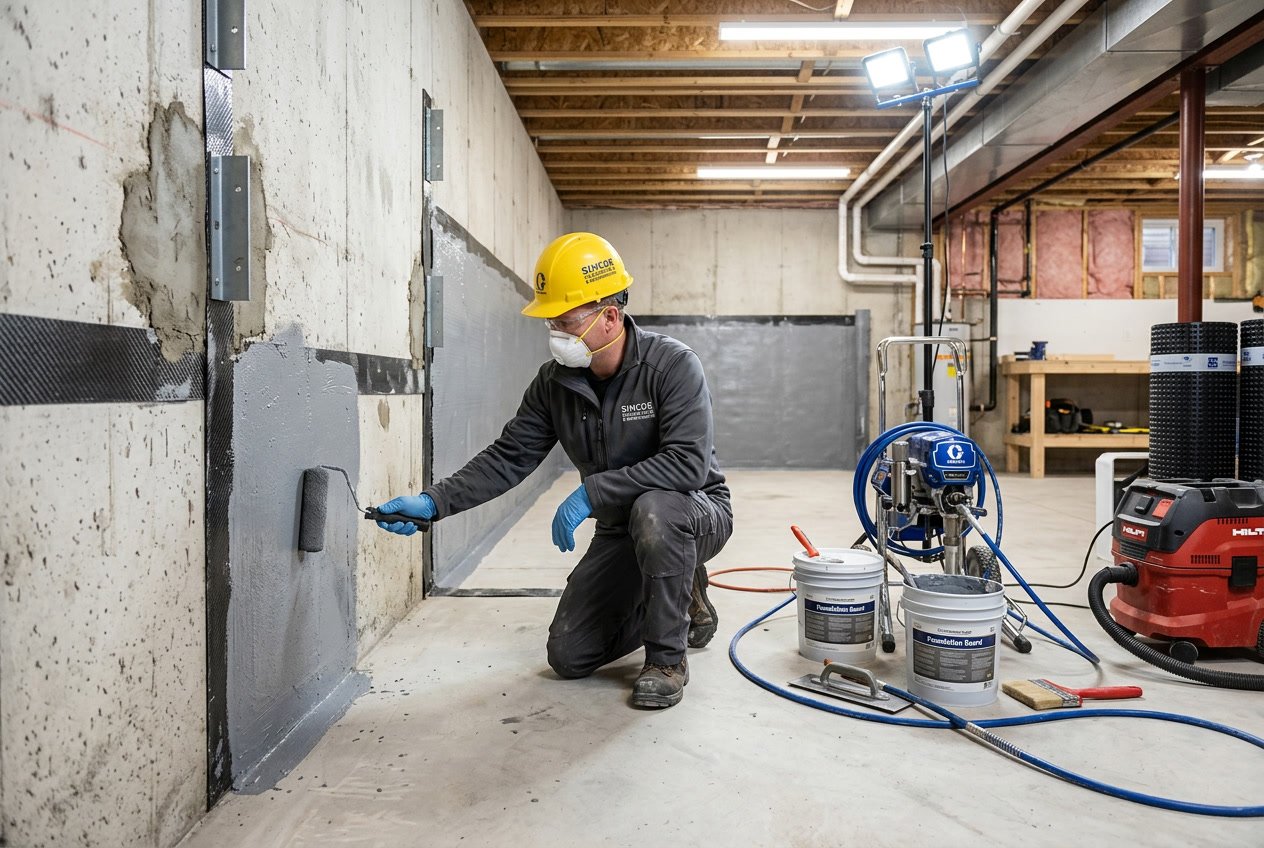
Homeowners in Simcoe face water intrusion challenges that require proven waterproofing methods. The most effective approaches include installing drainage systems inside your basement, applying protective barriers to foundation walls from the outside, and creating pathways for water to move away from your home.
Interior Waterproofing Techniques
Interior waterproofing focuses on managing water that has already entered your basement or threatens to breach your foundation walls. An interior drainage system collects water along the perimeter of your basement floor and directs it to a sump pump for removal. This method works by relieving hydrostatic pressure before water can damage your belongings or create mold growth.
The installation process involves removing a section of your basement floor along the walls, placing perforated pipes in a gravel bed, and covering them with new concrete. Many contractors offer a lifetime transferable warranty on these systems, which adds value to your home if you decide to sell.
Vapor barriers and dehumidification systems complement drainage installations. These materials prevent moisture from seeping through foundation walls and help maintain healthy humidity levels in your basement.
Exterior Waterproofing Methods
Foundation waterproofing from the outside addresses water problems at their source by preventing moisture from reaching your basement walls. This approach requires excavating soil around your foundation to expose the concrete or block walls completely.
Contractors apply waterproof membranes or coatings directly to the exterior foundation surface. These barriers create an impermeable shield against groundwater and rain that would otherwise saturate the soil around your home. The excavated area is then backfilled with drainage materials that help water flow away from the foundation.
This method costs more than interior solutions due to the excavation work required. However, it provides the most comprehensive protection against water damage and extends the life of your foundation. Before exterior excavation starts, homeowners in Ontario should have buried utilities located through Ontario One Call.
French Drains and Drainage Systems
French drains redirect water away from your foundation through a simple but effective design. These systems consist of a sloped trench filled with gravel and a perforated pipe that carries water to a safe discharge point away from your home.
You can install french drains either inside or outside your basement. Exterior installations intercept water before it reaches your foundation walls. Interior versions work similarly to other drainage systems by collecting water that enters through floor-wall joints.
The pipes must maintain proper slope to ensure water flows by gravity alone. Most installations include a sump pump as a backup to handle heavy water volume during storms or rapid snowmelt.
Foundation Repair Methods and Services
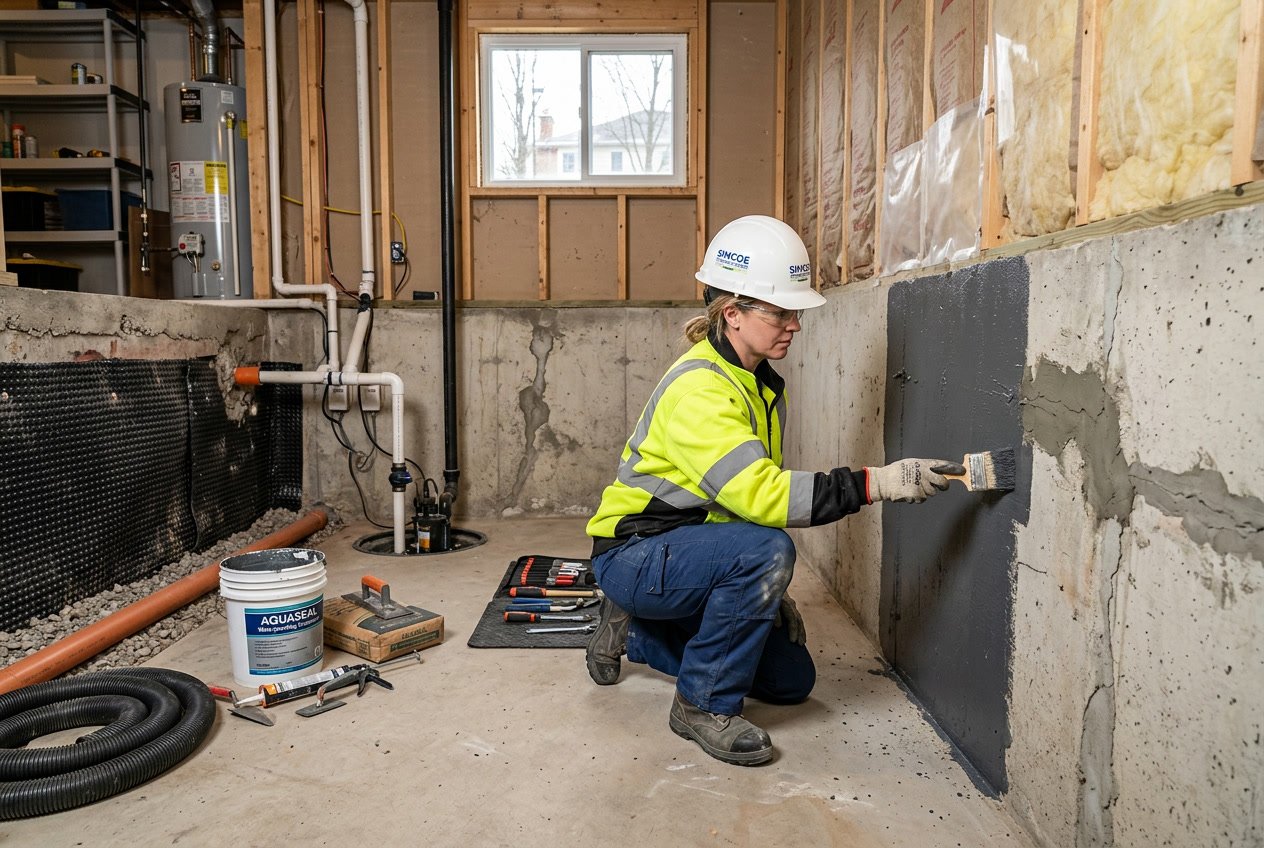
Foundation repair addresses structural damage through specialized techniques that fix cracks, stabilize walls, and restore concrete integrity. Professional contractors use different repair methods based on the type and severity of damage affecting your home’s foundation.
Foundation Crack Repair
Cracks in your foundation need immediate attention to prevent water infiltration and structural problems. Professional crack repairs are permanent solutions when completed with high-performance sealants and reinforcements designed for local climate conditions.
Not all cracks require the same repair approach. Vertical cracks often result from concrete shrinkage during curing and may only need surface sealing. Horizontal cracks, stair-step patterns, and widening gaps indicate serious structural stress that requires professional intervention.
Repair methods include:
- Epoxy injection for structural cracks
- Polyurethane foam for active water leaks
- Carbon fiber reinforcement for added strength
- Hydraulic cement for quick repairs
Even hairline cracks deserve attention. Freeze-thaw cycles and soil pressure can widen small cracks over time, allowing moisture to damage your foundation and create mold growth inside your home.
Structural Repair Options
Structural repair fixes foundation damage caused by soil movement, poor drainage, or aging materials. These repairs restore your home’s stability and prevent further deterioration of the foundation system.
Foundation underpinning strengthens foundations that have settled or shifted. Contractors install steel piers or helical anchors deep into stable soil beneath your foundation. These supports transfer your home’s weight to solid ground and can lift settled sections back to their original position.
Wall anchors and tie-back systems pull foundation walls back into alignment when soil pressure pushes them inward. Steel plates anchor to stable soil outside your foundation and connect to interior plates through steel rods.
Other structural solutions include installing support beams in crawl spaces, replacing deteriorated foundation sections, and adding concrete footings where none exist. Your contractor will determine which method works best based on soil conditions and damage severity.
Stabilizing Bowing Walls and Uneven Floors
Bowing walls occur when hydrostatic pressure from saturated soil pushes against your foundation. Left unaddressed, these walls can crack, lean inward, and eventually collapse.
Steel I-beams and carbon fiber straps are the most common stabilization methods. I-beams install vertically against the wall and anchor to floor joists above. Carbon fiber straps bond directly to the wall surface and provide tensile strength that stops further movement.
Wall plate anchors work for moderate to severe bowing. These systems use exterior anchors buried in stable soil connected to interior wall plates with steel rods. Tightening the rods gradually pulls the wall back toward its original position.
Uneven floors often signal foundation settlement or failing support structures. Contractors install adjustable steel posts or replace rotted wooden beams to restore proper floor height and stability.
Concrete and Slab Repairs
Concrete slabs crack and settle due to soil erosion, poor compaction, or water damage underneath. Repairing these issues prevents tripping hazards and stops water from undermining your foundation further.
Slab jacking lifts sunken concrete back to its proper level. Contractors drill small holes and pump material underneath until the slab rises. Modern polyurethane foam weighs less than traditional mud jacking and cures faster.
Surface repairs fix minor cracks and spalling with patching compounds or resurfacing products. Deep cracks need routing and sealing with flexible materials that accommodate minor movement without breaking apart.
Replacement becomes necessary when slabs have extensive damage, multiple large cracks, or significant deterioration. New concrete installations include proper base preparation and reinforcement to prevent future problems.
Essential Basement Protection Systems
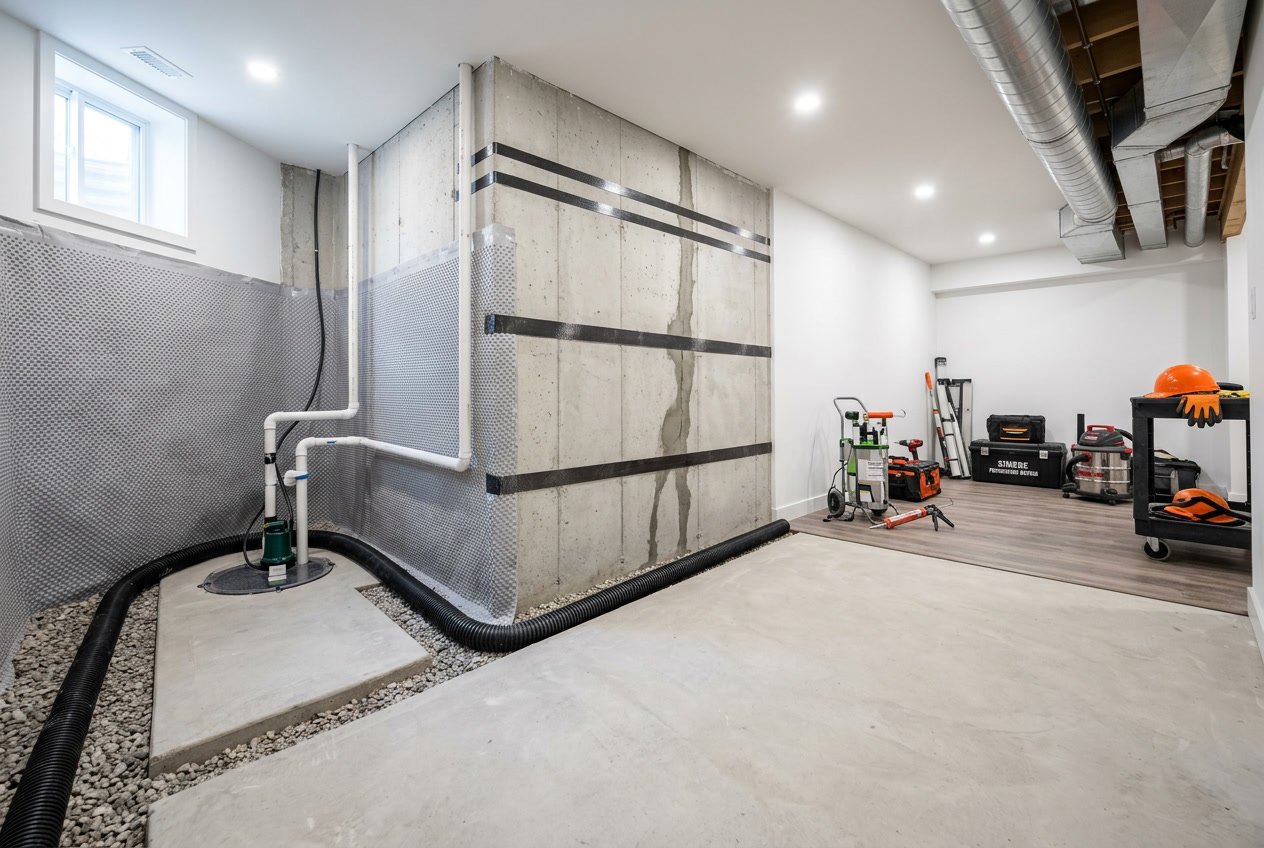
A complete basement protection system requires multiple components working together to keep water out and prevent structural damage. These systems protect your home’s foundation while maintaining a dry, usable basement space.
Sump Pump Installation and Maintenance
A sump pump removes water that accumulates in a basin, typically installed at the lowest point of your basement floor. The pump activates automatically when water reaches a certain level, pushing it away from your foundation through discharge pipes.
Primary sump pumps come in two types: pedestal and submersible. Pedestal pumps sit above the basin with a motor that lasts 25-30 years, while submersible pumps operate underwater and typically last 5-15 years. Most homes in Simcoe ON need pumps that handle 2,000-3,000 gallons per hour.
Regular maintenance keeps your pump working when you need it most. You should test it every three months by pouring water into the basin until it activates. Clean the inlet screen quarterly and check the discharge line for clogs or freezing. The float switch needs inspection to confirm proper movement.
Professional sump pump installation ensures proper basin size, correct pump capacity, and appropriate discharge location. A poorly installed system can fail during heavy rainfall when you need it most.
Backup and Battery Systems
Power outages during storms leave your primary pump useless right when basement flooding risks peak. A battery backup system provides protection during these critical periods.
Battery backup pumps typically run for 5-7 hours on a full charge, pumping 1,000-2,000 gallons before requiring recharge. The battery capacity you need depends on your typical water volume and local power outage duration. Most systems use marine-grade batteries that last 3-5 years.
Water-powered backup pumps offer an alternative that needs no electricity or batteries. These systems use municipal water pressure to create suction that removes basement water. They work indefinitely during outages but increase your water bill and require adequate water pressure to function.
Window Well and Drainage Installations
Window wells create access points for basement windows but also collect rainwater and snowmelt. Proper installation with drainage prevents water from pooling against your foundation and seeping through window seals.
Each window well needs a gravel base at least 6-8 inches deep to facilitate drainage. A drain pipe connected to your foundation drainage system or sump basin removes collected water. Clear polycarbonate covers keep out debris and precipitation while allowing natural light into your basement.
Wells should extend 8 inches above ground level and sit 4-6 inches away from your foundation wall. The space between well and wall gets filled with gravel for drainage. Metal or composite wells resist rust and cracking better than older concrete designs.
Choosing a Basement Waterproofing and Foundation Repair Company
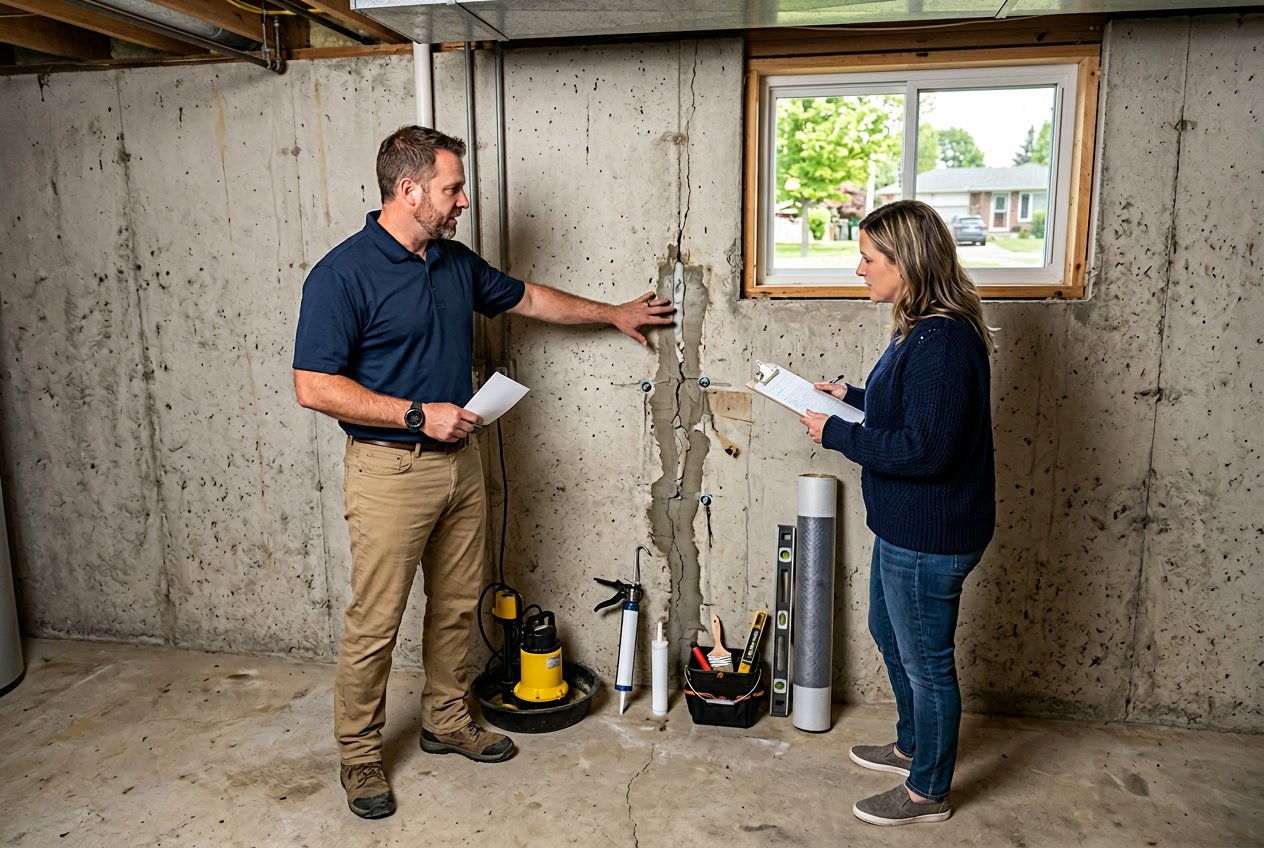
Finding the right contractor requires careful evaluation of their credentials, warranty offerings, and local knowledge. These factors determine whether you’ll receive quality workmanship and long-term protection for your home.
What to Look for in a Professional Contractor
Start by verifying that any company you consider has proper licensing and insurance coverage. Ask for proof of certification in specific waterproofing and foundation repair techniques. Request references from previous customers in Simcoe ON and surrounding areas.
A legitimate contractor will conduct a thorough inspection before providing an estimate. They should explain the source of water intrusion and recommend specific solutions tailored to your property. Be wary of companies that offer immediate quotes without assessing your basement.
Check how long the business has operated in your area. Experience matters when dealing with complex foundation issues. Review online ratings and complaints filed with consumer protection agencies. Certified waterproofing professionals typically maintain transparent business practices and documented customer satisfaction.
Importance of Warranties and Guarantees
Quality contractors back their work with comprehensive warranties. A transferable warranty adds value to your home if you decide to sell. Some companies offer a lifetime transferable warranty that protects both current and future homeowners.
Review what the warranty actually covers. Does it include both materials and labor? What circumstances void the coverage? Get all warranty terms in writing before signing any contract.
The length of warranty coverage often reflects the contractor’s confidence in their work. A 25-year warranty demonstrates commitment to quality. Compare warranty terms between different companies serving Ontario to identify the best protection for your investment. For newer homes, Ontario homeowners should also understand how Tarion warranty coverage applies to issues such as water penetration.
Coverage Areas and Local Expertise
Choose contractors familiar with soil conditions and weather patterns specific to your region. Companies operating in Simcoe ON, Brantford ON, Port Dover ON, and Tillsonburg ON understand local groundwater challenges and seasonal moisture fluctuations.
Local contractors respond faster to service calls and warranty claims. They’re invested in maintaining their reputation within the community. Ask whether the company has completed projects on properties similar to yours in terms of age and construction type.
Verify that the contractor can handle all aspects of your project, from excavation to cleanup. Some foundation waterproofing solutions require specialized equipment and trained crews to complete properly. If structural work or related building work is required, Norfolk County’s building permit process and inspection requirements are worth reviewing before the job starts.
Long-Term Benefits of Basement Waterproofing and Foundation Repair
Investing in waterproofing and foundation work protects your property from costly damage while creating a healthier living environment. These improvements safeguard your financial investment and reduce ongoing maintenance concerns.
Protecting Home Value in Simcoe
A dry basement and stable foundation directly impact what buyers will pay for your home. Water damage, visible cracks, or musty odors immediately raise concerns during inspections and can lower your asking price by thousands of dollars.
Foundation waterproofing preserves structural integrity by preventing water from weakening concrete and causing settlement issues. When you address foundation problems now, you avoid exponentially higher repair costs later. Fixing severe foundation damage can require extensive excavation and structural reinforcement, sometimes costing $10,000 to $30,000 or more.
Professional waterproofing systems often come with a lifetime transferable warranty, which provides documented protection that reassures potential buyers. This warranty transfers to new owners, making your property more attractive in a competitive market. You can also reclaim basement space for additional living areas like home offices, gyms, or guest rooms, effectively increasing your usable square footage without building an addition.
Health, Safety, and Peace of Mind
Excess moisture creates ideal conditions for mold and mildew growth within 24 to 48 hours of water exposure. Mold exposure causes respiratory problems, triggers allergies, and worsens asthma symptoms, particularly in children and elderly family members.
A properly waterproofed basement eliminates the constant worry about flooding during heavy rain or spring thaws. You won’t need to monitor weather forecasts anxiously or rush home to check your basement after every storm. Water intrusion also creates electrical hazards when it contacts outlets, appliances, or your home’s wiring system.
Maintaining a dry basement improves your home’s overall air quality since basement air circulates throughout your house. You’ll notice the elimination of musty smells and dampness that affect comfort levels. Your HVAC system also operates more efficiently when it doesn’t need to compensate for excess humidity, which can reduce your monthly energy bills by 10 to 15 percent.
Frequently Asked Questions
Homeowners dealing with wet basements and foundation issues need clear answers about repair methods, costs, and maintenance requirements. Understanding warning signs and preparation steps helps protect your home from water damage.
What are the most effective methods for waterproofing a basement in Simcoe, Ontario?
Interior waterproofing involves installing drainage systems along the foundation’s interior perimeter with a sump pump to collect and remove water. This method works well for managing water that has already penetrated the foundation walls.
Exterior waterproofing provides the most comprehensive protection by excavating around your foundation and applying waterproof membranes or coatings directly to the outside walls. This approach stops water before it reaches your basement.
Crack injection sealing uses polyurethane or epoxy materials to fill foundation cracks and prevent water seepage. Professional basement waterproofing in Simcoe often combines multiple methods for the best results.
How can I tell if my foundation needs repair?
Visible cracks wider than a quarter inch indicate potential structural problems that require professional assessment. Horizontal cracks are particularly concerning as they suggest pressure from soil or water against your foundation walls.
Doors and windows that stick or won’t close properly signal foundation movement. You may also notice gaps between walls and ceilings or floors that separate from walls.
Bowing or leaning foundation walls show serious structural stress. If you notice any of these signs, you should schedule an inspection with a foundation repair contractor right away.
What are the signs of potential water damage to be aware of in a basement?
Damp walls and musty odours are early warning signs that moisture has entered your basement. These issues often appear before you see visible water pooling on the floor.
White, chalky residue called efflorescence forms on concrete walls when water evaporates and leaves mineral deposits behind. Peeling paint or flaking concrete also indicates water penetration.
Water issues in basements can result from poor drainage, cracked foundations, or high water tables. Standing water, water stains, or mold growth require immediate attention to prevent structural damage.
What is the typical cost range for professional basement waterproofing and foundation repair services?
Minor crack repairs typically cost less than extensive waterproofing projects that require excavation and drainage system installation. The size of your basement and the severity of water problems directly affect the final price.
Interior waterproofing with a sump pump system generally costs less than exterior excavation and membrane application. Foundation repairs requiring structural reinforcement carry higher costs than simple crack sealing.
Basement waterproofing costs depend on the size of the basement, extent of water issues, and specific solutions required. Getting a detailed quote after a full inspection gives you an accurate price for your situation.
How often should I have my basement and foundation inspected to prevent future issues?
You should inspect your basement at least twice a year, particularly during spring thaw and after heavy rainfall periods. These times put the most stress on your foundation and waterproofing systems.
Professional inspections every three to five years help catch problems before they become expensive repairs. If you live in an older home or have had previous water issues, annual professional inspections provide better protection.
Check your sump pump, gutters, and downspouts regularly to ensure they work properly. Maintaining these systems extends the life of your waterproofing solutions and prevents future problems.
What steps should be taken to prepare a basement for waterproofing or foundation repair?
Clear all items away from walls and create easy access for contractors to reach foundation areas. Remove furniture, storage boxes, and any belongings that could get damaged during the repair process.
Identify and mark any areas where you have noticed water stains, cracks, or dampness. Taking photos of problem areas helps contractors understand the full scope of work needed.
Ensure contractors can access water and electricity for their equipment. You may need to remove drywall or finishing materials in some cases to expose the foundation for repair work.